Crime
Prosecutors: Palisades Fire Suspect Fueled by Relationship Grudge, Obsession with Luigi Mangione

The Palisades Fire suspect allegedly intentionally ignited a catastrophic blaze earlier this year, driven by a volatile blend of a failed relationship and a growing fixation on accused UnitedHealthcare shooter Luigi Mangione, Los Angeles prosecutors revealed in court Monday.
Franklin Orlando Hoover, 39, currently faces several felony counts, including arson of an inhabited structure and arson during a state of emergency. During a tense preliminary hearing, the District Attorney’s office detailed a digital trail of evidence they say proves the fire was not a random accident, but a deliberate act of “retributive rage.”
Palisades Fire Suspect Driven by Personal Grudge
According to prosecutors, Hoover’s mental state began to unravel following a bitter breakup late last year. Authorities say his social media activity and private messages grew increasingly erratic in the weeks leading up to the blaze. The fire ultimately scorched thousands of acres and forced the evacuation of some of the most expensive real estate in the country.
Investigators believe the suspect felt “discarded” by his former partner and the legal system alike. This personal grievance allegedly manifested as a desire to cause a “visible and undeniable” impact on the community. In the hills of Southern California, that desire translated into one of the most threatening wildfires the area has seen in recent winters.
The Luigi Mangione Connection
However, it was his alleged obsession with Luigi Mangione—the man charged in the high-profile killing of UnitedHealthcare CEO Brian Thompson in New York—that has added a chilling layer to the investigation.
Court filings show that investigators found dozens of screenshots on Hoover’s phone related to Mangione’s arrest, his alleged manifesto, and the public’s reaction to the shooting. Prosecutors argue that the Palisades Fire suspect viewed Mangione as a “revolutionary figure” and a symbol of resistance against a system he felt had failed him personally.
Deputy District Attorney Jonathan Hatami argued that Hoover sought to emulate the “disruptive impact” Mangione had achieved. While Mangione targeted an individual executive, prosecutors claim Hoover targeted the landscape of Southern California to command a similar level of national attention.
“The defendant wasn’t just upset; he was looking for a way to make the world feel his pain,” Hatami told the court. “He saw the notoriety Mangione received and, in his mind, he found a blueprint for how to become relevant.”
Community Impact and Ongoing Legal Battle
The Palisades Fire broke out in early January, quickly spiraling out of control due to dry brush and fierce Santa Ana winds. At its height, the fire threatened nearly 2,000 homes in the Pacific Palisades and Malibu areas. The cost of the firefighting effort alone has been estimated at over $15 million, not including the millions in property damage.

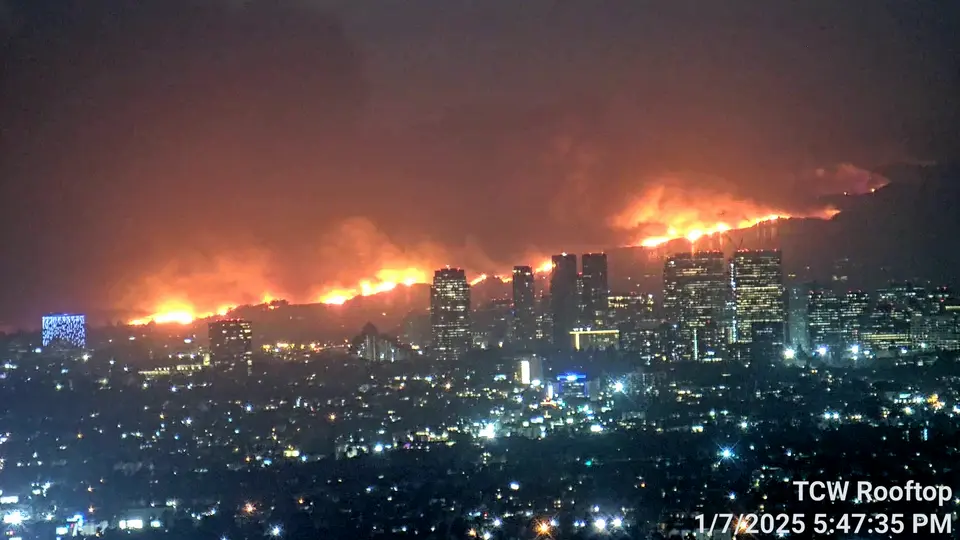
Witnesses reported seeing a man matching Hoover’s description near the ignition point in the Sepulveda Basin before the fire climbed into the hills. He was eventually apprehended by LAPD officers after a short pursuit near a popular hiking trailhead.
Hoover’s defense team has pushed back on the “revolutionary” narrative. His attorneys argue that Hoover has a documented history of mental health struggles that were exacerbated by the loss of his housing and the end of his relationship. They claim the fixation on Mangione is being “sensationalized” by the state to justify a harsher sentence rather than pursuing mental health treatment.
Despite the defense’s arguments, the judge ruled Monday that there is sufficient evidence for the case to proceed to trial. Hoover remains in custody on $2.5 million bail.
What Happens Next: A formal trial date is expected to be set during a hearing in late June. If convicted on all charges, the Palisades Fire suspect faces a maximum sentence of life in prison. Local authorities are continuing to monitor online forums to see if Hoover’s alleged motives have inspired any other “copycat” threats in the region.